

Short answer: A door lock that becomes stiff only when the temperature drops usually has an alignment, moisture, lubrication, or battery problem—not simply a “frozen lock.” Denver’s rapid temperature changes can shift a door and frame just enough to make the deadbolt rub the strike plate. Do not force the key. First test the lock with the door open, then check for moisture, a sagging door, or a low smart-lock battery. If the bolt still binds with the door open, the lock itself needs attention.
Denver’s average first freeze arrives around October 7, according to the National Weather Service Denver/Boulder office. That makes September a sensible time to deal with a lock that was “a little temperamental” last winter. Once the first sharp overnight drop arrives, a small problem can become the door that will not lock before work—or will not open when you get home.
Lock Pixies has served the Denver metro since 2011. Below is the same practical sequence our team uses to separate a door problem from a lock problem without guessing or reaching for the wrong spray.
Why does a door lock get harder to turn when it is cold?
Cold weather rarely creates a lock problem from nothing. It exposes a condition that warmer weather was hiding. Four causes account for most seasonal trouble.
1. The deadbolt and strike plate are slightly out of line
Wood doors and frames gain and lose moisture. Metal components contract as temperatures fall. Hinges also loosen gradually under the weight of the door. A movement of only a few millimeters can make the bolt scrape the edge of the strike opening.
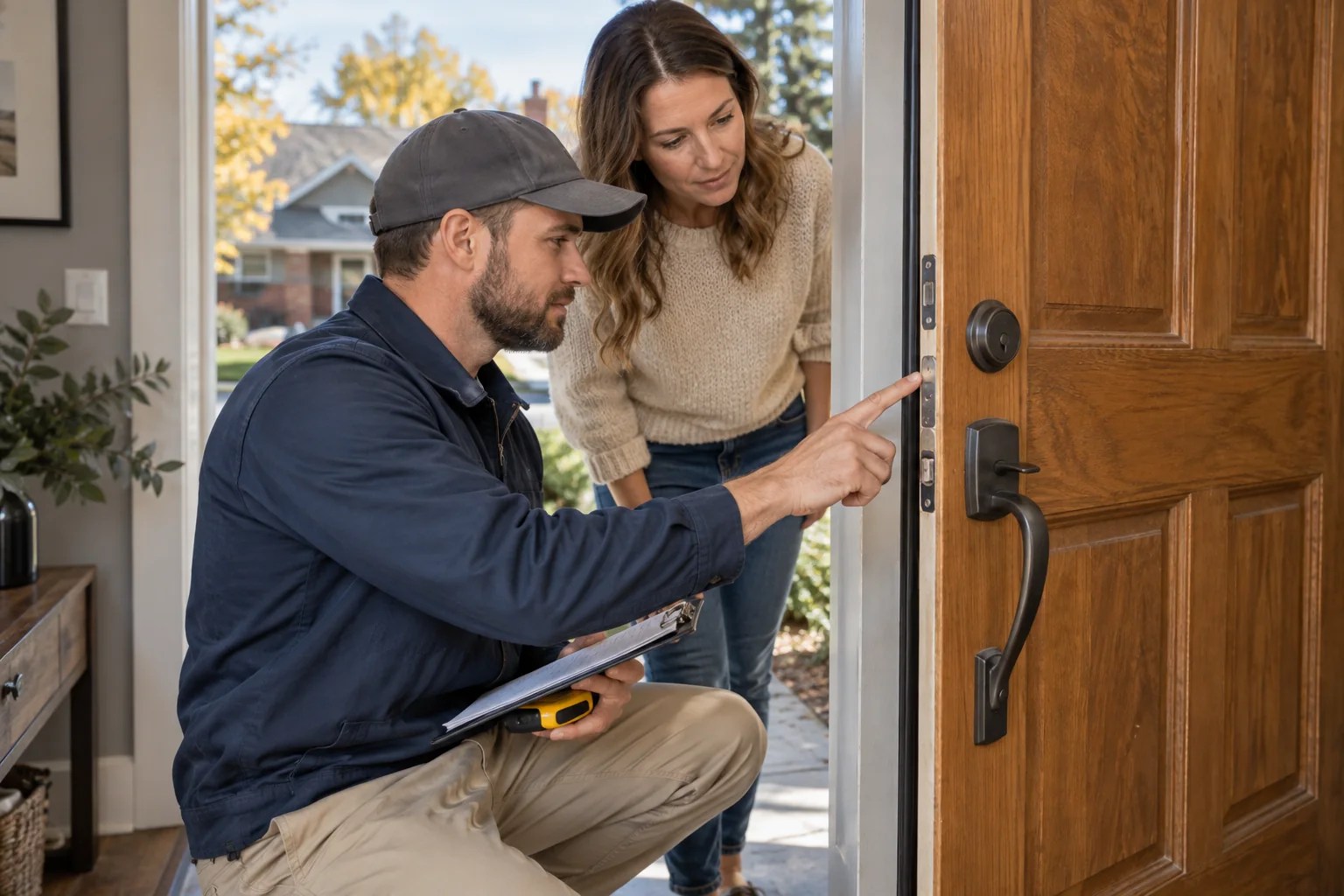
This is especially common when the lock turns normally while the door is open but becomes stiff after the door is closed. The cylinder may be perfectly healthy; the bolt is simply pushing against the frame instead of entering the strike cleanly.
2. Moisture has reached the cylinder
Melting snow, wind-driven precipitation, condensation, and a wet key can carry moisture into an exterior lock. When that moisture freezes, pins and other moving parts may not travel freely. Repeated freeze-thaw cycles also move grime around inside an older cylinder.
A lock does not need to look packed with ice to have a moisture issue. Intermittent stiffness after a sunny afternoon followed by a cold night is a useful clue.

3. The lock is dirty, worn, or lubricated with the wrong product
Dust and old residue can make the pins or cylinder feel sluggish. General-purpose oils may seem helpful for a day, but oily residue attracts debris and can become gummy. A dry lubricant specifically labeled for locks—often PTFE-based—is usually the cleaner choice when the manufacturer permits it.
If the key has to be wiggled, lifted, or pulled back slightly before it turns, wear may be affecting the key, the cylinder, or both. Lubricant cannot restore worn metal.
4. A smart lock is fighting resistance—or losing battery power
Cold reduces battery performance. At the same time, a misaligned bolt makes the motor work harder. That combination explains why a smart lock may operate during a warm afternoon, then beep, stall, or report “jammed” the next morning.
The electronic side and the physical door fit must both be checked. Our guide to smart lock installation in Denver explains why reliable bolt alignment matters as much as the app or keypad.
A safe two-minute test before you call a locksmith
Open the door and extend and retract the deadbolt several times using normal pressure.
- Smooth with the door open, stiff when closed: the likely issue is door or strike alignment.
- Stiff with the door open: the likely issue is the key, cylinder, bolt mechanism, contamination, or internal wear.
- Mechanical key works, smart motor struggles: check the batteries and alignment before assuming the electronics have failed.
- Key is bent, cracked, or badly worn: stop using it. A broken key inside the cylinder turns a small repair into an urgent call.
Next, lift gently on the door handle while turning the deadbolt. If that makes the bolt move more easily, the door may be sagging on its hinges. This is a diagnostic clue, not a long-term fix.
Never use pliers to add force to a key. Do not heat a lock with an open flame, pour hot water into it, or repeatedly drive a smart-lock motor against a jam. Those shortcuts can damage finishes, create more moisture, snap the key, or shorten the motor’s life.
For a lock that is already unreliable, Lock Pixies’ Denver door lock service can determine whether the right correction is alignment, lock repair, rekeying, or replacement.
What can you do before Denver’s first freeze?
Check every exterior door—not just the front door
Operate each deadbolt with the door open and closed. Pay attention to the garage entry, side door, patio door, and any detached structure. A rarely used door can deteriorate quietly until it is needed in an emergency.
Inspect the key
Compare the everyday key with a less-used spare. Rounded cuts, a twist along the blade, or a visible crack are reasons to retire it. A clean, accurate spare reduces stress on the cylinder.
Use only a lock-appropriate product
Follow the lock maker’s care instructions. If lubrication is allowed, use a small amount of a dry product made for lock cylinders. More is not better. Avoid cooking oil, motor oil, and water-displacing sprays as routine lock lubricants; residue can hold dirt.
Replace smart-lock batteries proactively
Do not wait for the first subfreezing morning if the app already shows a low-battery alert. Use the battery type and replacement procedure specified by the manufacturer, then test every access method—including the backup key or emergency-power option.
Book recurring problems before they become lockouts
A bolt that scrapes every winter is not a weather personality quirk. It is evidence that the door, frame, strike, hinges, or lock needs correction. A scheduled visit is calmer and usually gives you more options than an urgent call with the door stuck shut.
Lock Pixies’ residential locksmith service covers lock repair, replacement, rekeying, and entry-door hardware across the Denver metro.

Repair, realign, or replace? Use this decision guide
Alignment or door adjustment is the likely answer when:
- The bolt moves freely while the door is open.
- Lifting or pushing the door changes how the lock feels.
- Fresh rub marks appear on the strike plate.
- The door has begun dragging, rattling, or needing a push to latch.
Lock repair or cylinder service is more likely when:
- The key is stiff even with the door open.
- Multiple good keys behave the same way.
- The cylinder feels gritty or catches at the same point.
- The problem follows a freeze-thaw pattern despite good door alignment.
Replacement deserves consideration when:
- Hardware is cracked, heavily corroded, loose, or unreliable after service.
- The deadbolt does not extend fully.
- There has been forced-entry damage.
- Parts are obsolete or the current lock no longer fits the household’s access needs.
The goal is not to sell the most hardware. It is to correct the cause. A sound lock on a misaligned door needs a different fix from a worn cylinder on a well-fitted door.
When a cold-weather lock problem is urgent
Call promptly if the exterior door cannot be secured, a key is trapped or broken, the deadbolt will not retract, or someone is locked outside in unsafe weather. If there is an immediate threat to a person or evidence of a break-in, contact emergency services first.
For an access or security problem that cannot wait, use Lock Pixies’ emergency locksmith service in Denver. For planned work, a local locksmith serving Denver can inspect the whole opening and explain the options before work begins.
The bottom line
When a Denver door lock sticks in cold weather, begin with one question: Does it work smoothly while the door is open? That answer quickly separates alignment trouble from a fault inside the hardware. Avoid force and improvised heat. Address recurring friction before the next freeze, and treat a door that cannot lock as a security issue rather than a seasonal inconvenience.
Call Lock Pixies at (720) 304-5504 to schedule a cold-weather door and lock assessment in Denver, Greenwood Village, or the surrounding metro area.
Frequently asked questions about cold-weather door locks
Can cold weather make a deadbolt stop working?
Yes. Cold can thicken old residue, freeze moisture inside an exterior cylinder, reduce battery output in a smart lock, and change the fit between the door and frame. The weather may trigger the symptom, but the lasting fix depends on whether the resistance comes from alignment or from the lock itself.
Why does my deadbolt turn when the door is open but not when it is closed?
That pattern strongly points to alignment. The bolt is probably contacting the strike plate or the edge of its opening. Loose hinges, seasonal movement, weatherstripping pressure, or frame settling can all change the fit. Forcing the thumbturn or key can damage the bolt mechanism.
What should I spray in a frozen door lock?
Start by checking the lock manufacturer’s instructions. For routine care, a small amount of dry lubricant labeled for locks, often PTFE-based, is generally preferable to a wet household oil. Do not pour hot water into the keyway; it can refreeze. If ice or internal damage is suspected and the door must be secured, arrange professional service.
Does WD-40 fix a lock that sticks in winter?
A water-displacing spray may temporarily move moisture, but it is not the right default for ongoing cylinder lubrication. Some wet products leave residue that collects dust. Use only a product approved for the lock, and remember that no lubricant will correct a misaligned strike plate or worn parts.
Why does my smart lock say “jammed” only on cold mornings?
The motor may be pushing a deadbolt that no longer lines up cleanly, while cold batteries provide less power. Test the bolt manually with the door open, install fresh manufacturer-recommended batteries, and confirm the door closes without pressure. Repeated motor stalls should be inspected before they damage the mechanism.
Should I replace a lock that sticks every winter?
Not automatically. If the lock is smooth with the door open, realignment may solve the problem without replacing it. Replacement is more appropriate when the hardware is worn, damaged, corroded, insecure, or still unreliable after the door fit and cylinder have been assessed.