

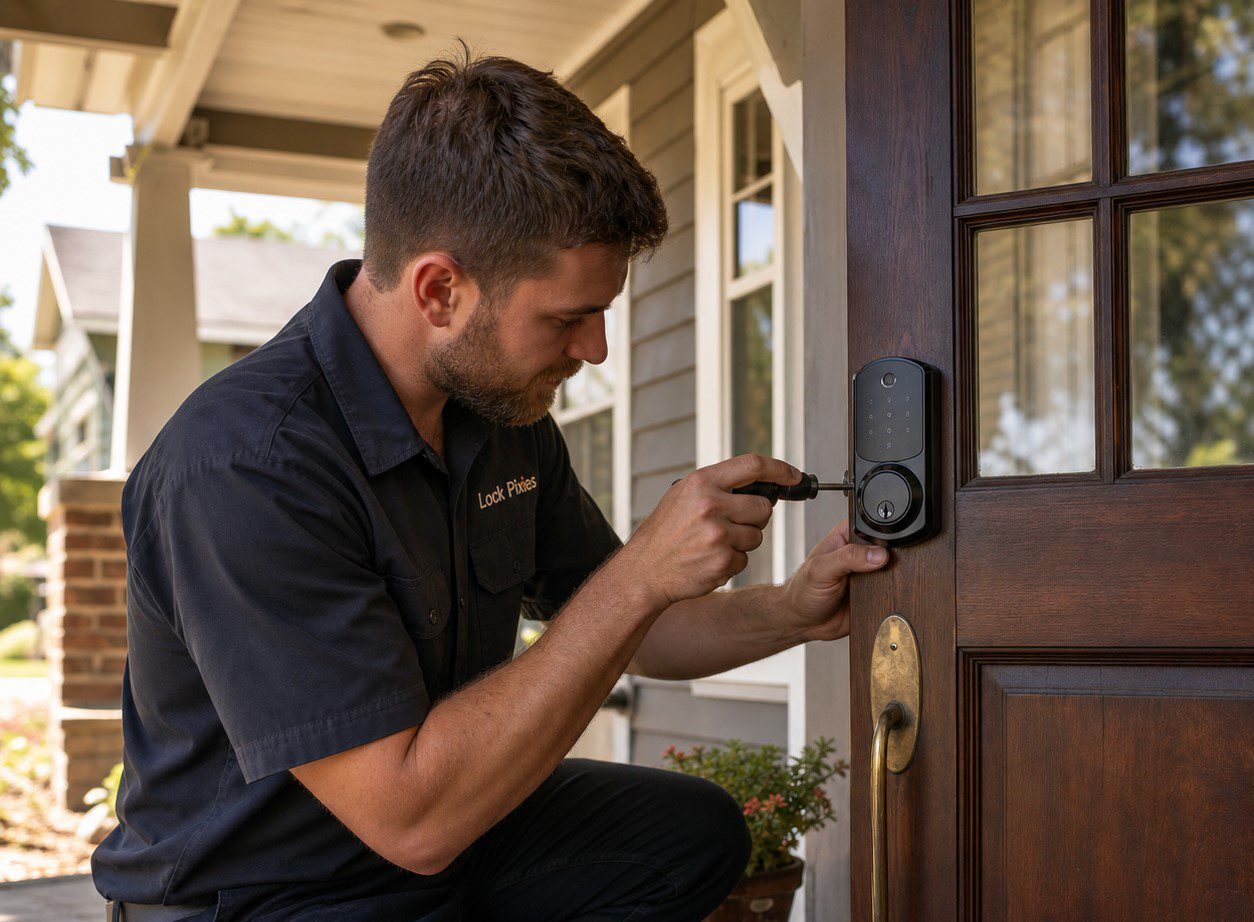
Denver’s housing market has shifted dramatically toward smart home technology over the past several years, and the front door lock is one of the first things homeowners and renters look to upgrade. Smart locks offer something traditional deadbolts can’t: the ability to control who gets in without relying on a physical key that can be lost, copied, or left inside. In a city where the rental market is active, where short-term rentals are common, and where Colorado’s temperature swings create year-round access challenges, that kind of control has real practical value.
But smart lock installation isn’t as simple as swapping a deadbolt. The lock needs to fit your door correctly, communicate reliably with your network or phone, be programmed before it provides any security, and in many cases needs to integrate with a broader access control setup at the property. Done right, it’s one of the most useful security upgrades a Denver homeowner can make. Done poorly, it creates the opposite of what it’s meant to — a door that works inconsistently or that can’t be managed when the technology doesn’t cooperate.
This guide covers how smart locks actually work, which types make sense for different Denver properties, what professional installation involves beyond just mounting the hardware, and how to make sure the system you choose is genuinely improving your security rather than adding complexity without benefit.
What a Smart Lock Actually Does (and What It Doesn’t)
A smart lock replaces or supplements the traditional deadbolt cylinder with an electronic locking mechanism that can be controlled via a code, a smartphone app, a proximity sensor, a fingerprint, or some combination of those. The physical bolt still extends into the door frame the same way a conventional deadbolt does. What changes is how that bolt is controlled — and more importantly, how you manage who has access.
With a traditional deadbolt, access control is entirely physical. You hand someone a key, and until you rekey the lock, they have access. With a smart lock, you issue a digital credential — a code, a permission in an app, or a registered fingerprint — that you can revoke at any time without touching the hardware. For Denver homeowners who rent through platforms like Airbnb, for landlords managing multiple units, and for anyone who’s ever had to rekey a lock because a key was lost or a tenant changed, this distinction has immediate practical value.
What smart locks don’t do is inherently make your door stronger. The deadbolt’s physical security depends on the bolt quality, the strike plate, and the door frame — the same factors that determine a conventional lock’s effectiveness. A smart lock with a Grade 3 bolt mechanism is less secure than a Grade 1 deadbolt with a reinforced strike plate, regardless of how sophisticated the electronics are. Our smart lock installation service in Denver always includes a door and frame assessment before any hardware is recommended, because both elements need to be right for the installation to actually provide what it promises.
Types of Smart Locks for Denver Homes and Businesses
Smart locks aren’t a single product — they’re a category that covers several quite different technologies. Choosing the right type for your property depends on your door, your network situation, and how you actually want to manage access.
- Keypad smart locks — access via a numeric code entered on a physical pad. No phone or app required. Ideal for rental properties, families with children, or anyone who wants the simplicity of a code without connectivity dependencies. These work without internet access and have no range limitations.
- WiFi-enabled smart locks — full remote control and management through a smartphone app, including real-time alerts, activity logs, and the ability to lock or unlock from anywhere. Depends on a stable WiFi signal at the door location, which isn’t always where routers provide their best coverage.
- Bluetooth smart locks — connect to your phone when in proximity, typically within 30 feet. Lower battery consumption than WiFi, but no remote access without adding a separate hub or bridge device.
- Biometric smart locks — fingerprint access, no code or phone required. High security for properties with restricted access requirements or for homeowners who want zero-credential entry. Fingerprint readers perform differently in very cold or very wet conditions, a real consideration for Colorado winters.
- Z-Wave and Zigbee smart locks — designed to integrate into broader smart home ecosystems including Amazon Alexa, Google Home, and Apple HomeKit. Require a compatible hub but offer deeper automation capabilities, such as locking automatically when the alarm is armed or unlocking when a specific person arrives.
For most Denver residential properties, a WiFi-enabled keypad lock balances convenience, reliability, and access management well. For rental properties and multi-unit buildings in Centennial, Greenwood Village, and the south metro, keypad-only systems are often more practical because they don’t require tenants to have or manage a specific app. Lock Pixies works with all major brands and recommends hardware based on your specific door and situation rather than brand preference.
Smart Lock vs. Traditional Deadbolt: What the Comparison Actually Looks Like
Before committing to a smart lock upgrade, it’s worth understanding what you’re trading and gaining compared to a high-quality conventional deadbolt. Here’s an honest side-by-side comparison:
| Factor | Smart Lock | Quality Traditional Deadbolt |
| Access control | Digital codes, app, biometric — revocable instantly | Physical keys — requires rekeying to change access |
| Remote management | Lock/unlock from anywhere (WiFi models) | Not possible |
| Activity logs | Full entry history with timestamps | Not available |
| Power dependency | Battery-powered, 1-12 months per charge | No power required |
| Physical security | Depends on bolt grade and strike plate | Depends on bolt grade and strike plate |
| Installation complexity | Requires door assessment, connectivity setup, programming | Standard bore hole installation |
| Cost | $150 to $400+ for hardware, plus installation | $60 to $200 for Grade 1 hardware, plus installation |
| Failure mode | Battery death, connectivity loss, software issues | Mechanical wear only |
| Best for | Rental properties, frequent access changes, remote management | Primary security without tech dependency |
The comparison isn’t about which is better — it’s about which fits the specific situation. A smart lock on a door with a weak frame and a short strike plate screw provides less real security than a Grade 1 deadbolt properly installed. Our entry door lock service in Denver covers both smart and conventional options, and we’ll always tell you which approach makes more practical sense for your door before recommending either one.

Two Denver-Specific Challenges That Affect Smart Lock Performance
Colorado’s Temperature Swings and Door Frame Alignment
Denver’s location at 5,280 feet creates temperature swings that are more dramatic than most places in the country. A 40-degree drop from afternoon to overnight is common during spring and fall. Metal door frames expand and contract with these swings, and a smart lock deadbolt that throws cleanly into the strike plate at 65 degrees may sit a fraction off at 10 degrees below zero. A motorized smart lock bolt working against a misaligned strike plate wears out its motor in months rather than years.
This is why professional installation includes verifying bolt throw alignment across a range of door positions before calling the job complete. Homes in older Denver neighborhoods — Capitol Hill, Baker, the Highlands, Washington Park — and older construction throughout Greenwood Village and Centennial are particularly likely to have door frame settling that affects alignment. Lock Pixies technicians check this specifically before mounting any smart lock hardware.
HOA Hardware Requirements in Greenwood Village, Highland Ranch, and the South Metro
Many properties in Greenwood Village, Highland Ranch, Cherry Hills Village, and similar HOA-managed south metro communities have exterior hardware requirements covering finish, appearance, and in some cases approved brand lists. A smart lock that meets every security objective but conflicts with HOA hardware specifications creates a compliance problem that costs time and money to correct. Lock Pixies is based in Greenwood Village and knows the specific hardware requirements that appear frequently in HOA communities throughout Arapahoe County. We confirm compatibility before any purchase is made rather than discovering conflicts mid-installation.
What Professional Smart Lock Installation Actually Involves
The marketing materials for most smart lock brands show installation as a 15-minute DIY project. The reality involves more variables than that, and the ones that get skipped in a DIY installation are usually the ones that create problems six months later.
A proper professional installation covers the following:
- Door and bore assessment — confirming the existing bore hole dimensions match the lock’s requirements, checking that the door is plumb, and identifying any frame or alignment issues before hardware is purchased
- Connectivity verification — testing WiFi signal strength at the exact door location before committing to a WiFi lock at that spot; front doors and garage entries are often not where routers provide their strongest signal
- Hardware installation — mounting the lock body with correct torque on fasteners, ensuring the deadbolt throws fully into the strike plate without binding, and verifying the door opens and closes normally with the lock installed
- Strike plate assessment — confirming the existing strike plate uses structural screws that anchor into the door frame stud; a smart lock on a door with a weak strike plate installation still fails under forced entry
- Full programming walkthrough — configuring user codes, setting auto-lock timing, activating low-battery notifications, and confirming backup access methods work before leaving the property
- App setup and connectivity test — for WiFi and Bluetooth locks, confirming remote access functions correctly and that the user knows how to manage credentials from the app
A lock that’s mounted but not properly set up provides no security benefit. Our residential locksmith team handles every step of this process, including the follow-up confirmation that the system is fully operational before the appointment ends. Lock Pixies backs all installation work with a 6-month guarantee.
Smart Locks and Home Security: The Broader Picture
A smart lock improves access management significantly. Whether it improves physical security depends on what’s already in place and what gets installed alongside it. The bolt quality, the strike plate, the door construction, and the frame condition all contribute equally to how well a door actually resists forced entry. Upgrading to a smart lock on a door with a hollow core and short strike plate screws doesn’t produce a meaningfully more secure entry point.
For Denver homeowners who want a comprehensive approach, the sequence that makes the most practical sense is: start with the door hardware foundation (Grade 1 bolt, reinforced strike plate, solid core door), then add smart access control on top of that foundation. Lock Pixies handles both layers — our lock replacement service covers hardware upgrades, and our smart lock installation covers the electronic access layer. They can be done together in one appointment or sequentially, depending on your situation and budget.
For broader home security guidance specific to Denver, the Denver Police Department’s Safety and Crime Prevention page provides Denver-specific resources including neighborhood crime prevention guidance that complements physical security improvements like smart lock upgrades. The DPD consistently identifies door hardware as a primary factor in residential property crime prevention.
Where Smart Lock Installation Makes the Most Sense in the Denver Metro
Not every property is the right candidate for a smart lock. The situations where the investment provides the clearest practical benefit include:
- Short-term rental properties in Capitol Hill, Cherry Creek, LoDo, and the Highlands where guest access codes need to change between stays without anyone being physically present to hand off a key
- Multi-unit rental properties where different tenants need unit-specific access and landlords need to change credentials during turnover without scheduling a rekeying appointment
- Denver homeowners who travel frequently and need to monitor entry activity, grant temporary access to contractors or housecleaners, or verify the door is locked remotely
- South metro properties in Littleton, Lakewood, and Greenwood Village where families with multiple drivers or regular service providers benefit from individual access credentials rather than managing physical keys
- Commercial properties and offices in the Denver metro where staff access needs to be tracked, restricted by time or role, and updated without issuing or collecting physical keys during staff changes
For commercial applications, smart locks often connect to a broader access control system that manages credentials across multiple entry points, logs all activity, and integrates with alarm or camera systems. Lock Pixies handles both residential smart lock installation and commercial access control integration across the Denver metro.
Why Lock Pixies Handles Smart Lock Installation in Denver
Lock Pixies has been serving Greenwood Village and the Denver metro area since 2011, led by Tiffanny Dehaven — Denver’s first female locksmith owner-operator and a lifelong Colorado resident. Smart lock technology has evolved significantly over those years, and our team has experience with every generation of device that’s come to market in that time, from the early Bluetooth-only models to today’s integrated WiFi and biometric systems.
We carry and install hardware from all major brands including Schlage, Kwikset, Yale, August, Ultraloq, and Level, and we recommend based on your door, your connectivity situation, and how you actually want to use the system — not on whatever’s most popular that month. Every installation includes a full functionality walkthrough before we leave, a 6-month guarantee on the work, and the same transparent pricing we provide for every service we offer. Prices are confirmed before any work begins.
Our mobile locksmith service covers the full Denver metro area, and most south metro installations including Greenwood Village, Centennial, Englewood, Englewood, Commerce City, and Aurora are schedulable same-day or next-day. For emergency smart lock situations — a lock that’s failed and left the door unsecured, or a battery death with no backup access — our emergency locksmith responds within 30 minutes.
Summary
Smart lock installation in Denver makes a meaningful difference when the right technology is matched to the door and the property, installed with proper alignment and connectivity verification, and fully programmed before the technician leaves. The hardware alone doesn’t create the benefit — the installation quality and the setup do. For Denver homeowners and property managers looking to upgrade access control without taking on a complex DIY project, professional installation by a locally based, experienced locksmith produces reliably better outcomes than a weekend install that skips the steps that matter.
Lock Pixies handles smart lock installation across Greenwood Village, Denver, and the surrounding metro seven days a week. Call (720) 304-5504 to schedule an assessment or same-day installation.
Frequently Asked Questions About Smart Lock Installation in Denver
Can a smart lock be installed on any door in Denver?
Most standard residential doors with an existing deadbolt bore are compatible with smart lock hardware. Non-standard bore sizes, unusually thick doors, glass-panel doors, and older frames without proper reinforcement may need assessment and preparation before a modern smart lock will fit correctly. Lock Pixies assesses the door before recommending hardware, which prevents the situation where a homeowner purchases a lock that doesn’t fit their door before the installation appointment. Call us to confirm compatibility before purchasing anything.
What happens if the smart lock battery dies?
Most quality smart locks provide low-battery warnings through the app well before power runs out. If the battery is completely depleted, most keypad and WiFi models include an external 9V battery terminal on the face of the lock that provides emergency power to retract the bolt and enter with your code. Some models include a physical key override behind a small cover on the face. During every installation, Lock Pixies walks you through the backup access procedure specific to your lock before leaving, so you know exactly what to do before you need to.
How long does smart lock installation take in Greenwood Village and Denver?
A single-door installation typically takes 45 to 90 minutes, including door alignment verification, hardware mounting, connectivity setup, and a complete programming walkthrough. Installations involving multiple doors, older Denver properties needing bore modification, or commercial properties with access control integration take longer and are scoped individually before scheduling. Lock Pixies provides a realistic time estimate when you describe the installation during the scheduling call.
Do smart locks work during a power outage?
Yes. Smart locks run on internal batteries rather than home electricity, so they continue to operate during power outages. The exception is features that depend on your home network, like remote access through an app or real-time activity notifications. These won’t work if the router loses power, but the lock itself continues to accept codes and biometric credentials normally. If you’re concerned about extended outages, most smart locks support a physical key backup that works independently of any electronic function.
Is smart lock installation more expensive than traditional lock installation?
Smart lock hardware costs more than a comparable-quality traditional deadbolt — typically $150 to $400 for the lock itself, compared to $60 to $150 for a Grade 1 mechanical deadbolt. Installation costs are similar for both, since the door assessment and hardware mounting steps are essentially the same. The connectivity setup and programming walkthrough add some time to a smart lock installation that a traditional deadbolt doesn’t require. Whether the difference is worth it depends on how much value you place on the access management features. Lock Pixies provides upfront pricing on all installations before any work begins.
How do I know I’m hiring a licensed locksmith for smart lock installation in Denver?
Colorado requires locksmiths to hold a valid state license, which you can verify before any appointment through the Colorado Division of Regulatory Agencies license lookup. Lock Pixies is fully licensed, bonded, and insured, and our license number is available on request. Tiffanny Dehaven, Lock Pixies’ founder, has been a licensed Colorado locksmith since the company’s founding in 2011 and holds the distinction of being the first female locksmith owner-operator in the Denver area. A legitimate locksmith provides credentials without hesitation when asked.