

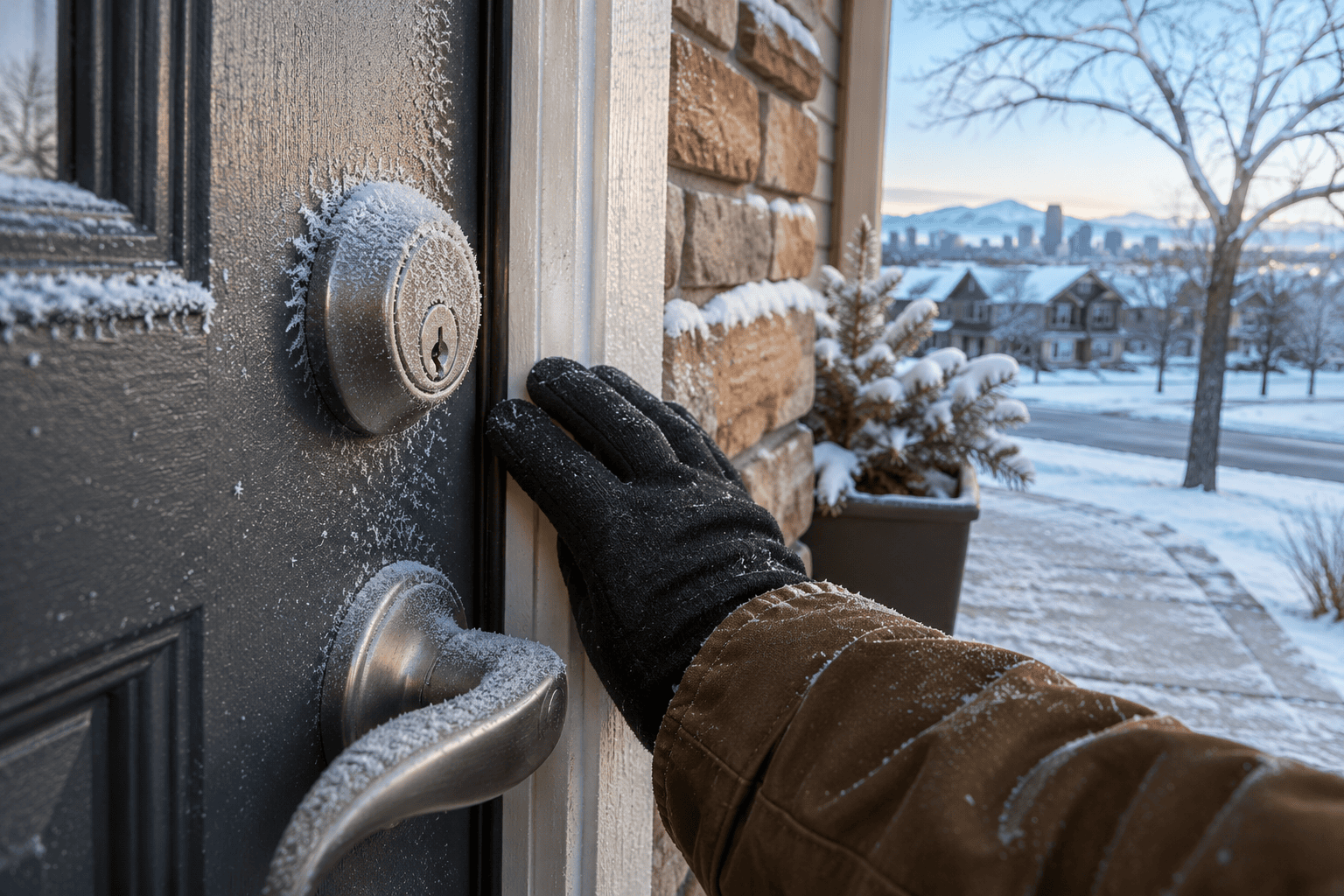
If a house key stops turning during a Denver freeze, stop before the key bends or snaps. A frozen lock may contain ice, but the same symptom can come from a shifted door, a worn key, contaminated lubricant, or internal cylinder damage. Try only low-risk warming and drying steps. If the key still resists, the lock will not secure, or part of the key breaks, a mobile locksmith should inspect the door rather than forcing it.
This guide is for homeowners and renters deciding whether a winter lock problem is a simple cold-weather nuisance or a service call. For a broader explanation of why doors bind as temperatures change, see our guide to a door lock that sticks in Denver cold weather. Here, the focus is what happens next when the door will not open, latch, or lock reliably.
Is the lock frozen, or is the door out of alignment?
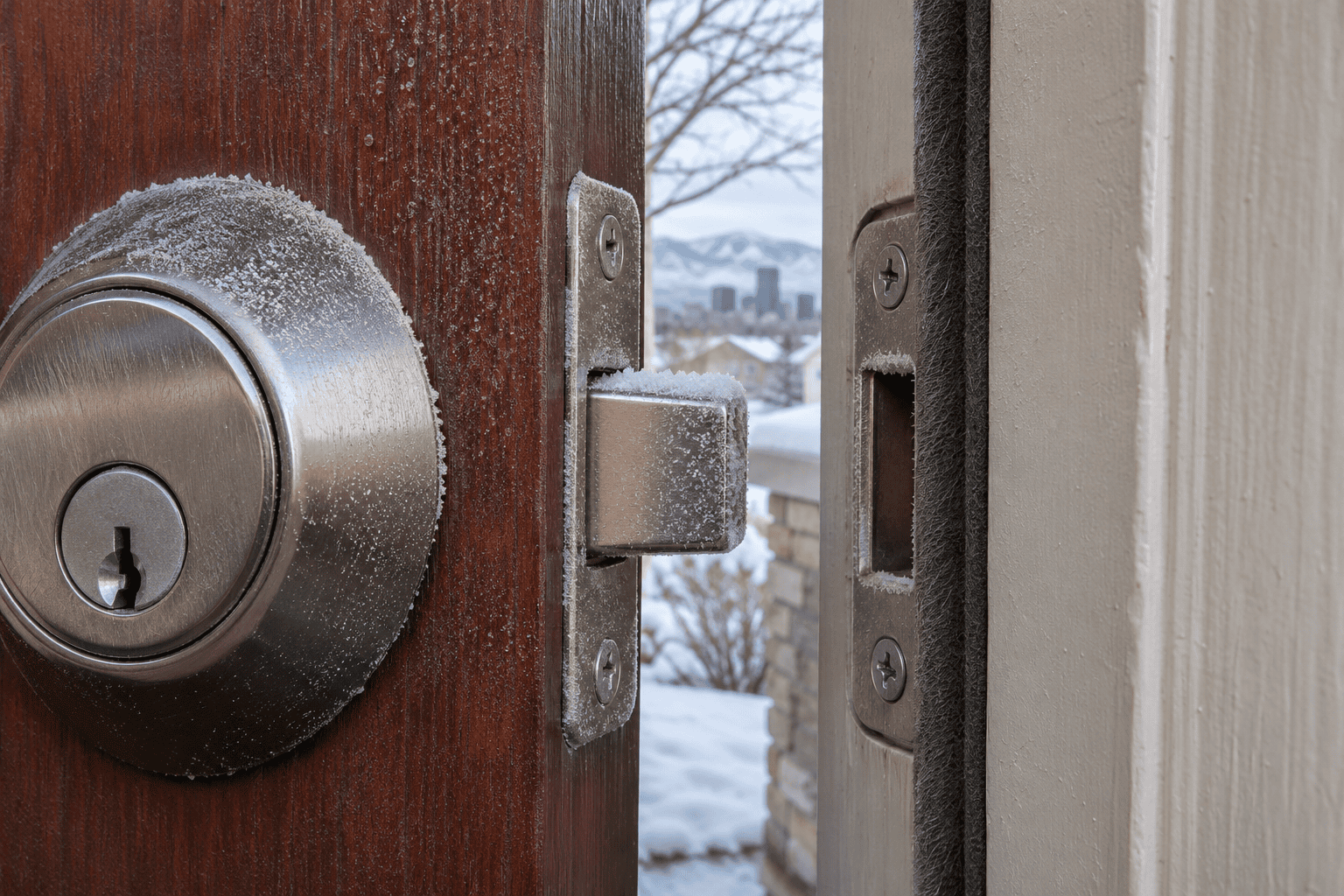
Ice in the keyway is only one possibility. Moisture can enter the cylinder during wet snow, a warm afternoon, or repeated freeze-thaw cycles and then harden overnight. In that case, the key may not insert fully or may stop almost immediately when you try to turn it.
Door alignment feels different. The key may turn normally while the deadbolt drags against the strike plate. Try the lock with the door open, but only if you are already inside and can do so safely. If the bolt moves freely with the door open and binds when the door is closed, the problem is probably the opening—not ice inside the cylinder.
| What you notice | Likely direction | Best next step |
|---|---|---|
| Key will not insert fully | Ice or debris in the keyway | Use gentle warmth; never force the key |
| Key turns with the door open but not closed | Door or strike misalignment | Arrange adjustment or lock service |
| Key bends, grinds, or catches in several locks | Worn or damaged key | Stop using it and test an undamaged spare |
| Thumbturn is stiff from the inside | Mechanical binding or cylinder problem | Call for inspection |
| Bolt will not extend or retract fully | Alignment or internal hardware fault | Do not leave the opening unsecured |
Safe steps to try before requesting service
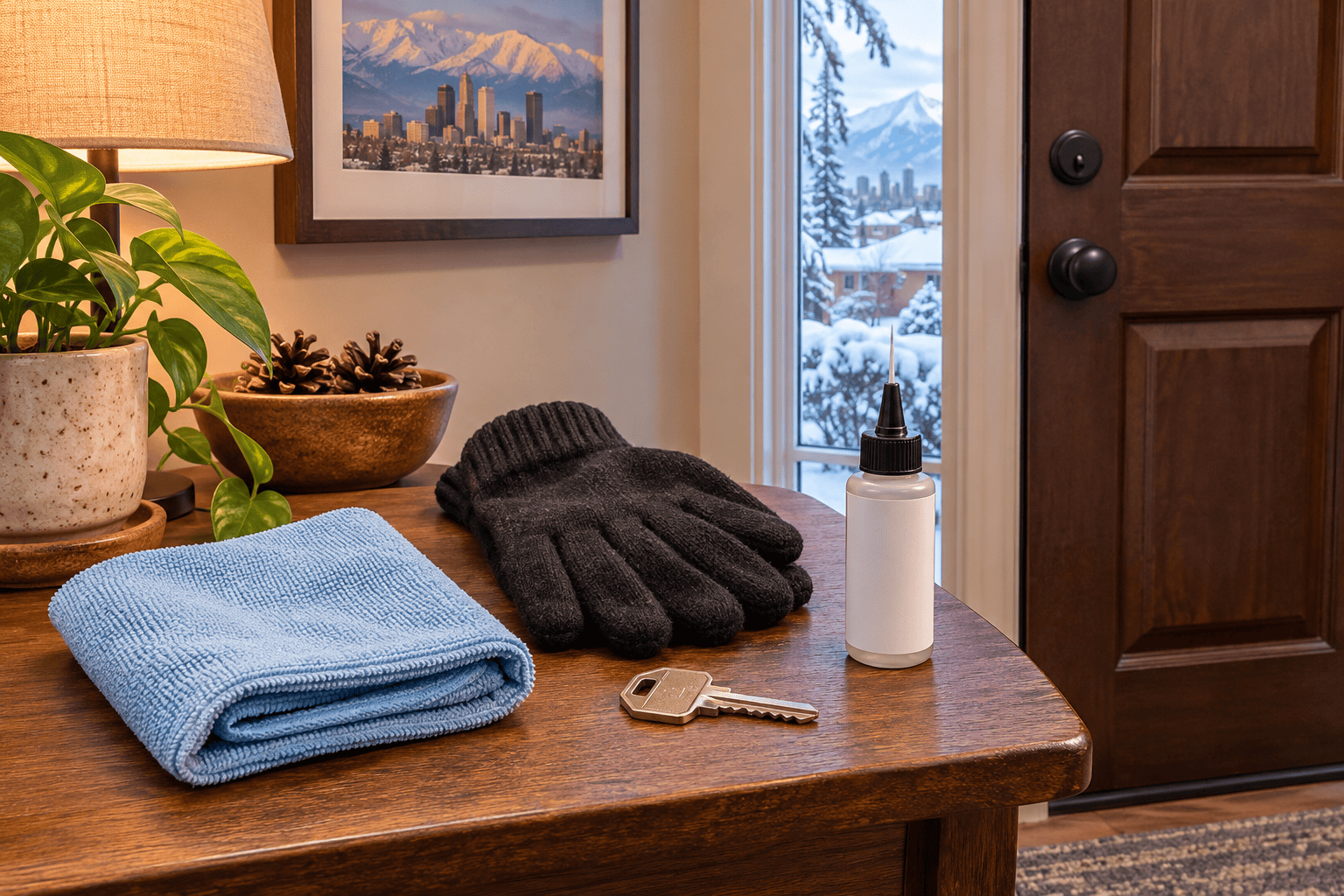
- Use a dry, undamaged spare key. A worn key can mimic a frozen cylinder and is more likely to break under extra winter pressure.
- Warm the key gradually. Hold it in a gloved hand or bring it to indoor room temperature, then insert it gently. Do not use an open flame.
- Keep liquid water away from the keyway. Hot water may work for a moment and then refreeze deeper in the mechanism or damage finishes and nearby materials.
- Remove surface moisture. Wipe the lock and key dry. If you use a de-icer or lubricant, choose one intended for locks and follow its label; household oils can hold dirt and become gummy.
- Apply almost no turning force. If resistance remains after a gentle attempt, stop. A broken key extraction and cylinder repair cost more than a careful diagnosis.
Check the National Weather Service’s Denver Metro winter weather page before an approaching cold snap. A forecast with freezing precipitation or a sharp overnight temperature drop gives you time to test exterior doors while the house is warm and occupied.
Call a locksmith when the lock is more than cold
A frozen lock service call is justified when safe warming does not restore normal movement, when a key is stuck or broken, or when the door cannot be secured. It is also smart to call if the lock works intermittently. A cylinder that frees up at noon and jams again after sunset is not dependable enough for an exterior door.
- The key will not turn after a gentle warm-up.
- The key or thumbturn feels gritty, loose, or uneven.
- A key is bent, cracked, or broken in the lock.
- The deadbolt stops before fully entering the frame.
- The latch works only when you lift, pull, or push the door hard.
- The lock was already unreliable before the freeze.
- The home is occupied but the exterior door cannot be locked.
Lock Pixies provides residential locksmith service in Denver for lock repair, rekeying, replacement, and home lockouts. If the door is your only safe entrance or the property cannot be secured, describe that clearly when requesting emergency locksmith help.
What a locksmith checks at a frozen house lock
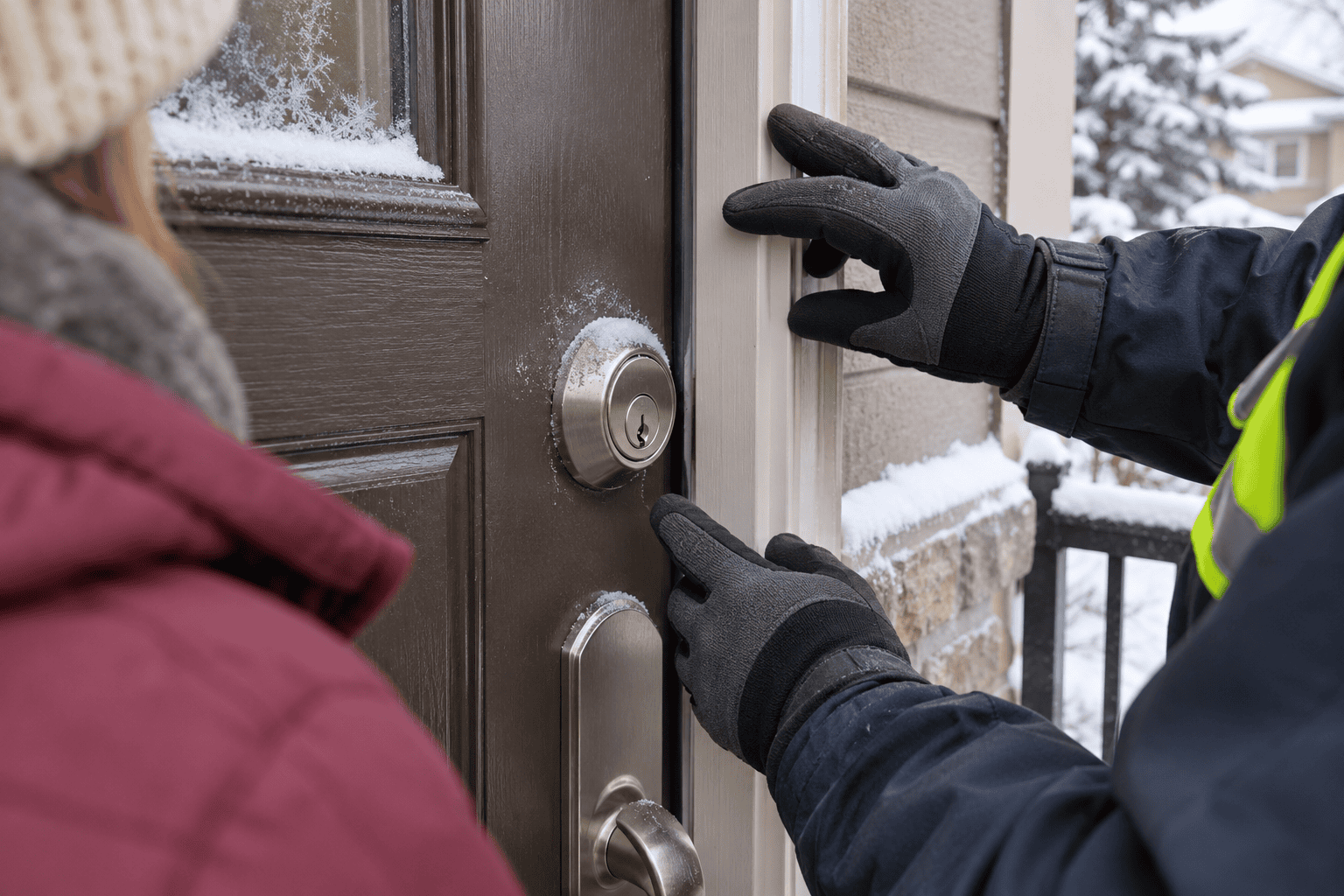
The first job is diagnosis. A technician can compare the working key and spare, inspect the keyway, test the cylinder from both sides, check the bolt’s travel, and look for strike-plate contact. The door, hinges, weatherstripping, and frame matter because a perfectly good cylinder can still feel “frozen” when the opening has shifted.
If the lock contains moisture or unsuitable lubricant, it may need cleaning and a lock-appropriate dry lubricant. A damaged cylinder may need repair or replacement. If the hardware is sound but old keys should no longer work, rekeying the lock changes key control without necessarily replacing the entire assembly.
Ask the technician to show whether the trouble is in the cylinder, key, deadbolt, or door alignment before approving the work. Our broader Denver door lock services page explains repair and replacement options for worn, jammed, and damaged locks.
Prevent the next cold-morning lockout
Test every exterior lock before the first hard freeze and replace badly worn keys. Keep the entry protected from roof runoff and melting snow where practical. If the door rubs, needs to be lifted, or shows daylight around the weatherstripping, correct the alignment before the temperature drops again. Keep a verified spare with a trusted person rather than in an obvious outdoor hiding place.
After service, operate the lock several times with the door open and closed. The key should enter cleanly, turn without excessive pressure, and release easily. The bolt should extend fully into the strike. Those simple checks are more useful than waiting for the next freeze to find out whether the repair held.
Frequently asked questions
Can a locksmith open a frozen house lock in Denver?
Yes. A mobile residential locksmith can assess whether ice, a worn key, door misalignment, or internal damage is preventing operation. The appropriate method depends on the hardware and its condition. Proof that you live at or are authorized to access the property may be requested before entry service begins.
Should I pour hot water on a frozen door lock?
No. Water can enter the cylinder and refreeze, making the problem worse. Sudden heat may also affect finishes or nearby materials. Use gentle, dry warmth and a product specifically labeled for locks; stop if the key still resists.
Why does my deadbolt work when the door is open but not closed?
That usually points to alignment rather than a frozen cylinder. Cold and moisture can change how the door and frame sit, and hinges or weatherstripping may add pressure. A technician can identify where the bolt contacts the strike and correct the underlying issue.
Will lock de-icer damage my lock?
A product designed for locks can be appropriate when used exactly as directed, but formulas and finishes vary. Avoid improvised chemicals and excess product. If the lock repeatedly freezes, moisture entry, contamination, or worn hardware should be addressed instead of adding more de-icer.
What if my key broke inside the frozen lock?
Stop turning or pushing the fragment deeper. Do not insert glue, screws, or household tools. A locksmith can remove the fragment, assess the cylinder, and make or recommend a sound replacement key. Tell the dispatcher whether any part of the key remains visible.
How quickly should I fix a lock that freezes repeatedly?
Before the next overnight freeze. Repeated failure means the opening is not reliable, even if the lock works after warming. A prompt inspection reduces the chance of a broken key, an avoidable lockout, or a door that cannot be secured when you leave.
Need help now? Call Lock Pixies at (720) 304-5504 and describe the door, the symptoms, your Denver-area location, and whether the property is currently secure.