

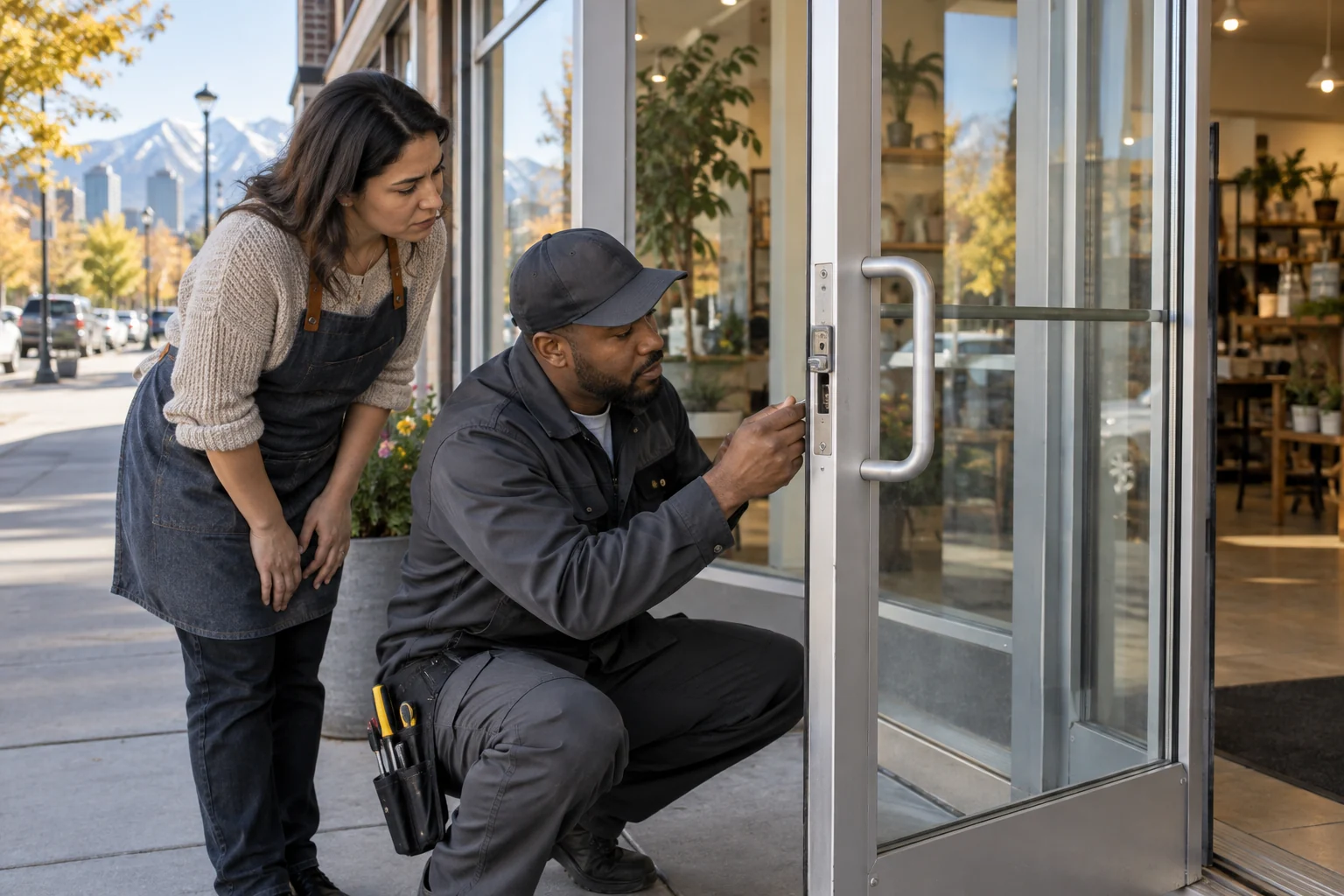
Short answer: When a commercial door will not latch, the lock is not always the problem. A sagging door, misaligned strike, weak or incorrectly adjusted closer, damaged latch, loose hinge, weatherstripping pressure, or binding panic hardware can all leave a Denver business door looking closed without being secure. Test the door gently from both sides, note whether the latch reaches the strike, and do not force or disable exit hardware. If the door protects the building after hours or forms part of an exit route, arrange prompt professional inspection.
A door that needs a shoulder push every morning is easy to dismiss as an annoyance. For a business, however, unreliable latching can become an access problem, a security gap, or an egress concern. Denver’s Community Planning and Development department explains that building work is reviewed against the city’s adopted Building and Fire Code; its plan review, permits, and inspections guidance is the appropriate local starting point when a project goes beyond routine service or like-for-like repair.
Lock Pixies has served the Denver metro since 2011. This guide helps business owners and property managers identify what the door is telling them before a small fault turns into a lockout or an unsecured storefront.
Why won’t a commercial door latch?
A latch works only when the door, frame, closer, hinges or pivots, strike plate, and lockset meet in the correct position and sequence. The problem is often a few millimeters of movement rather than a failed lock cylinder.
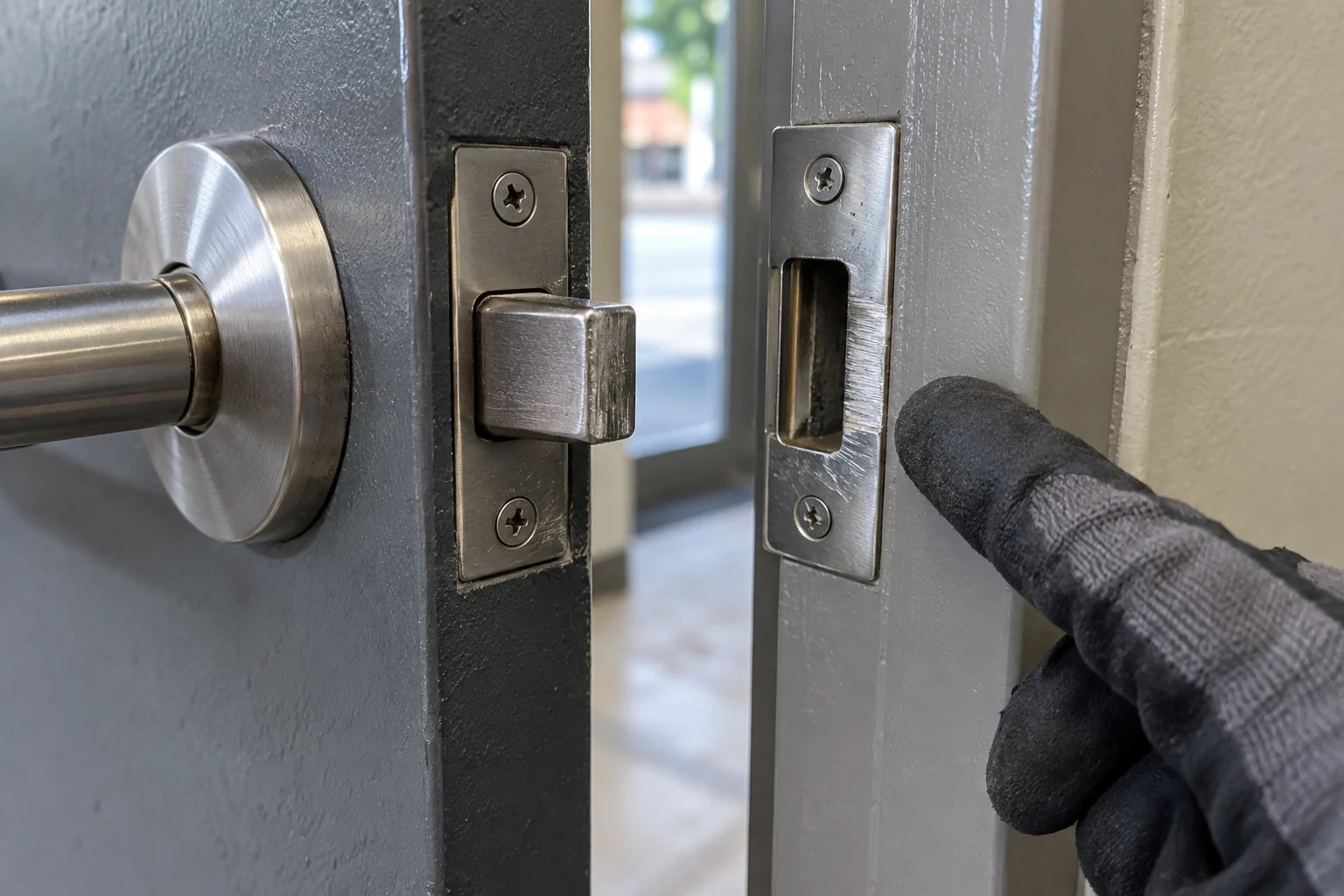
1. The latch and strike are out of alignment
Look for bright scrape marks on the strike plate, chipped paint at one edge of the opening, or a latch that lands above or below the strike. Heavy commercial doors cycle far more often than a typical residential door. Hinge wear, loose fasteners, frame movement, or an impact from carts and deliveries can gradually change the fit.
If lifting the door slightly changes how it latches, hinge or pivot wear is a strong possibility. If pushing or pulling the door toward the frame helps, the strike position, weather seals, or closer action may be involved.
2. The door closer is not completing the final movement
A hydraulic closer controls more than closing speed. During the last portion of travel, the door still needs enough controlled force to overcome seals and seat the latch. A closer that leaks, has been adjusted incorrectly, is poorly matched to the door, or is fighting air pressure may stop just short.
A slamming door is not evidence of a healthy closer, either. Excessive speed can damage the latch, loosen hardware, create a hazard for customers, and still fail to produce reliable latching.
3. The latch or lock body is worn or damaged
If the latch will not retract smoothly when the door is open, sticks inside the door edge, or feels loose, the fault may be inside the lockset. High-use storefront and office doors can wear springs, spindles, levers, cylinders, and latch components. Lubricant cannot restore a broken spring or deformed part.
A commercial locksmith serving Denver businesses can separate lock wear from door-fit problems and recommend repair or replacement based on the actual failure.
4. Panic or exit hardware is binding
On an exit door, the latch may be part of a panic bar or fire-exit hardware assembly rather than a standard cylindrical lock. Loose mounting, worn internal parts, door sag, an obstructed strike, or an incorrect adjustment can keep the device from relatching.
Do not tape down, wedge, or dismantle exit hardware to keep the business running. Lock Pixies’ panic bar installation and repair service covers hardware that must release easily from the inside and secure correctly after the door closes.
5. Weather, seals, thresholds, or pressure are resisting the door
Denver temperature swings can change the fit of metal components, seals, and surrounding materials. New weatherstripping may be too tight. A raised threshold, debris, ice, a floor mat, or a bent sweep can prevent the door from reaching the frame. In some buildings, air pressure also makes an exterior door harder to close.
These conditions may reveal an existing weakness rather than create the whole problem. The useful question is not simply “Is it cold?” but “Which component prevents the latch from entering the strike?”
A safe five-minute check before calling a locksmith
Do not remove covers or change closer valves. Instead, make a few observations that will help the technician arrive with better information.
- Open the door and operate the lever or panic bar. The latch should retract and return without grinding, hesitation, or sticking.
- Close the door slowly by hand. Watch where the latch meets the strike. Note whether it lands high, low, or to one side.
- Let the closer operate normally. Does the door stop short, close too slowly, slam, or bounce away from the frame?
- Check for simple obstructions. Move loose mats and remove visible debris without altering the threshold or safety hardware.
- Test security from the outside. Once the door appears closed, confirm it cannot be pulled open without authorized access.
If the latch works smoothly with the door open but misses the strike when closed, alignment or closer performance is more likely than a cylinder problem. If the latch itself sticks with the door open, the lock or exit device needs attention.

Is it the closer, the lock, or the door alignment?
The closer is the leading suspect when:
- The latch enters the strike when you close the door gently by hand.
- The door consistently stops during the final few inches of travel.
- Closing speed changes noticeably with temperature.
- Oil is visible on the closer body or door.
- The door slams, bounces, or moves unpredictably.
Alignment or hinge work is more likely when:
- The latch hits above, below, or beside the strike opening.
- The door rubs the frame or threshold.
- Lifting the handle side changes the result.
- Fasteners are loose or the door has visible movement at the hinges or pivots.
Lock or latch service is more likely when:
- The latch fails to spring back with the door open.
- The lever, thumbturn, key, or panic bar feels rough or loose.
- The cylinder turns but does not operate the latch consistently.
- Metal fragments, cracking, or deformation are visible.
Electronic credentials add another layer. If the card reader accepts a badge but the door remains locked or will not relatch, the mechanical opening and the electronic release both need to be checked. See Lock Pixies’ Denver access control services for systems where readers, electric strikes, request-to-exit hardware, and door position must work together.
What should a business avoid adjusting?
Commercial hardware often looks simple from the outside, but small adjustments interact. Avoid drilling a larger strike opening, bending the latch, removing a closer arm, changing unlabeled valves, or adding a second locking device to an exit door. Those changes can mask the cause, damage listed hardware, or interfere with free egress.
Also avoid propping an exterior door open while waiting for repair. If the entrance cannot secure, move sensitive items away from the opening, control access with staff if it is safe to do so, and arrange urgent help. Lock Pixies’ emergency locksmith service is the appropriate route when a Denver business cannot lock its door or safely use an exit.
Repair, realign, or replace?
Realignment may be enough when the components are sound but the latch and strike no longer meet. The technician should still identify why the position changed—loose hinges, pivot wear, frame movement, or impact—rather than simply moving the strike again.
Repair makes sense when serviceable commercial hardware has a correctable fault such as loose mounting, a worn replaceable component, closer adjustment within manufacturer limits, or debris inside an appropriate service point.
Replacement is more reasonable when hardware is cracked, leaking, badly worn, obsolete, incorrectly specified, repeatedly failing, or incompatible with the door’s security and traffic demands. Any change affecting an exit, fire-rated opening, or access-control sequence deserves extra care.
For conventional cylinders, deadlatches, and related entry hardware, Lock Pixies also provides door lock repair and replacement in Denver.

When is a commercial door problem urgent?
Arrange prompt service when the main entrance cannot lock, an exit will not open normally, a fire or exit door will not close and latch, a closer is leaking, hardware is pulling away from the door, a break-in damaged the opening, or staff must force the door during normal use. If there is an immediate danger to people, a fire-safety concern, or an active break-in, contact emergency services first.
A rear door that “usually catches on the second try” is not a maintenance plan. Repeated failure increases wear and makes it easier for someone closing up at night to assume the building is secured when it is not.
How to prevent repeat latching problems
- Include every exterior and restricted-area door in routine opening and closing checks.
- Record which door fails, when it happens, and whether weather or building pressure changes the symptom.
- Report scraping, slamming, leaking closers, loose levers, and delayed relatching before the door fails completely.
- Keep mats, deliveries, cords, and merchandise clear of the swing and exit route.
- After tenant or staffing changes, review keys, credentials, and who is responsible for locking each entrance.
Good commercial door maintenance is less about repeatedly tightening whatever looks loose and more about preserving the relationship among the door, frame, hardware, access system, and daily traffic.
The bottom line
When a commercial door will not latch, start by observing whether the latch works with the door open and where it contacts the strike during closing. That quickly separates many lock problems from alignment and closer problems. Do not force the door or defeat panic hardware. A business entrance that cannot secure—or an exit that cannot operate normally—should be treated as an operational and safety issue.
Call Lock Pixies at (720) 304-5504 to schedule commercial door and lock service in Denver, Greenwood Village, or the surrounding metro area.
Frequently asked questions about commercial doors that will not latch
Why does my commercial door latch only when I push or pull it?
That usually means the latch and strike are not meeting cleanly or the closer is not completing the final portion of travel. Hinge or pivot wear, a shifted strike, tight weatherstripping, frame movement, or insufficient closing force can produce the same symptom. The direction of the extra pressure is a useful diagnostic clue.
Can I adjust a commercial door closer myself?
It is better to have the whole opening assessed first. Turning the wrong valve or over-adjusting a closer can cause slamming, leakage, unsafe closing speed, or damage. A closer also cannot correct a sagging door, obstructed strike, failing latch, or pressure problem by itself.
Why does my storefront door look closed but remain unlocked?
The latch may be resting against the strike instead of entering it. A deadlatch can also be held in the wrong position by poor alignment. Always test the door from the unsecured side after closing. If it pulls open without a key or credential, treat the opening as unsecured until repaired.
Can Denver cold weather stop a commercial door from latching?
Temperature changes can affect seals, metal fit, lubricants, closer performance, and ice or debris around thresholds. Cold often exposes an existing alignment or maintenance problem. Repeated seasonal failure deserves inspection rather than a stronger push or an improvised lubricant.
What should I do if a panic-bar door will not relatch?
Keep the exit path clear and do not tape, wedge, or dismantle the panic hardware. Check only for visible obstructions and arrange professional service. The problem may involve door alignment, the strike, the latch mechanism, mounting, or the closer, and repairs must preserve easy egress from inside.
Do I need a locksmith or a door company?
A commercial locksmith is a sensible first call when the fault involves the lock, latch, cylinder, strike, panic hardware, key control, or access control. Some openings also need frame, glass, structural, electrical, or specialized door work. A good diagnosis should identify that boundary instead of replacing lock parts that are not causing the problem.