

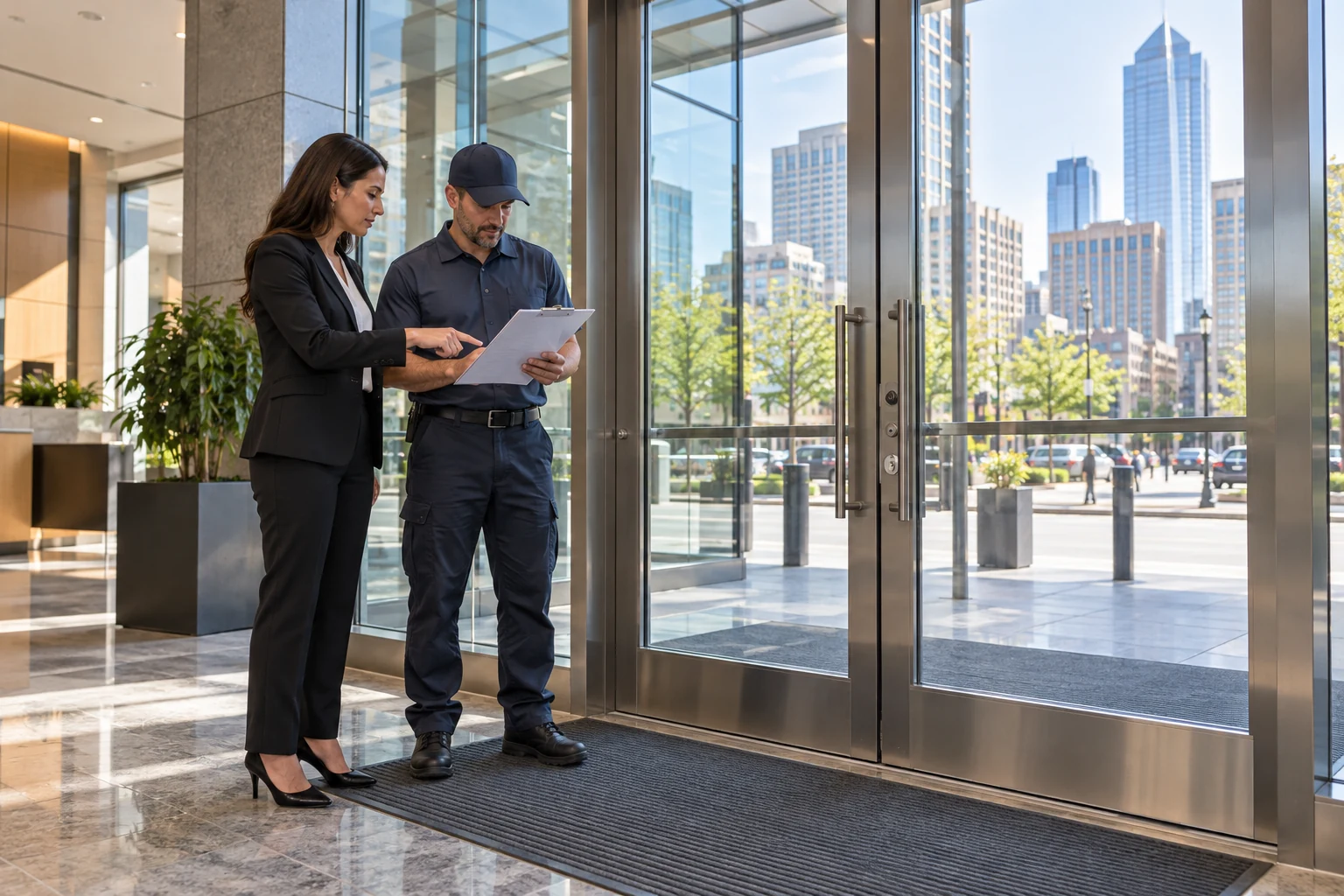
Short answer: After an employee, manager, vendor, or tenant leaves, a Downtown Denver business should not automatically replace every lock. Start with an access audit: identify every physical key and electronic credential, remove permissions that are no longer needed, inspect the doors those credentials operate, and rekey only the cylinders whose key control can no longer be trusted. The goal is to close real gaps without interrupting staff, deliveries, customers, or life-safety functions.
That question is especially timely downtown. The Downtown Denver Partnership reported a 74% weekday return-to-office rate in March 2026, along with 18 new ground-floor businesses and 526,000 square feet of leasing activity during the year to date. Its March 2026 High Frequency Update points to more people, more tenant movement, and more active entrances across the center city.
More activity is good for downtown. It also means businesses are issuing keys, changing suites, adding contractors, reopening doors, and adjusting schedules. A documented review helps property managers keep access aligned with the people who actually need it.
What is a commercial access audit?
A commercial access audit is a door-by-door comparison of three things: who should have access, what keys or credentials are currently active, and whether each opening closes and secures correctly. It covers more than the lock cylinder. The door, frame, strike, closer, latch, panic hardware, reader, request-to-exit device, and management process all affect the result.
A commercial locksmith serving Denver businesses can evaluate the mechanical opening while the business owner or property manager confirms personnel, schedules, and authorization levels. Neither half of the review is complete without the other.
When should a Downtown Denver business review access?
- After an employee, manager, cleaner, or contractor leaves.
- When a tenant moves into or out of an office or retail suite.
- After a key, access card, phone, or fob is lost.
- When staff return to the office on new hybrid schedules.
- After a break-in, attempted break-in, or unexplained door event.
- When nobody can produce an accurate key or credential list.
- Before reopening an entrance that has been inactive or lightly used.
The best time is before the former user’s last working day. That allows the business to collect issued property, schedule permission changes, and avoid an urgent after-hours response.
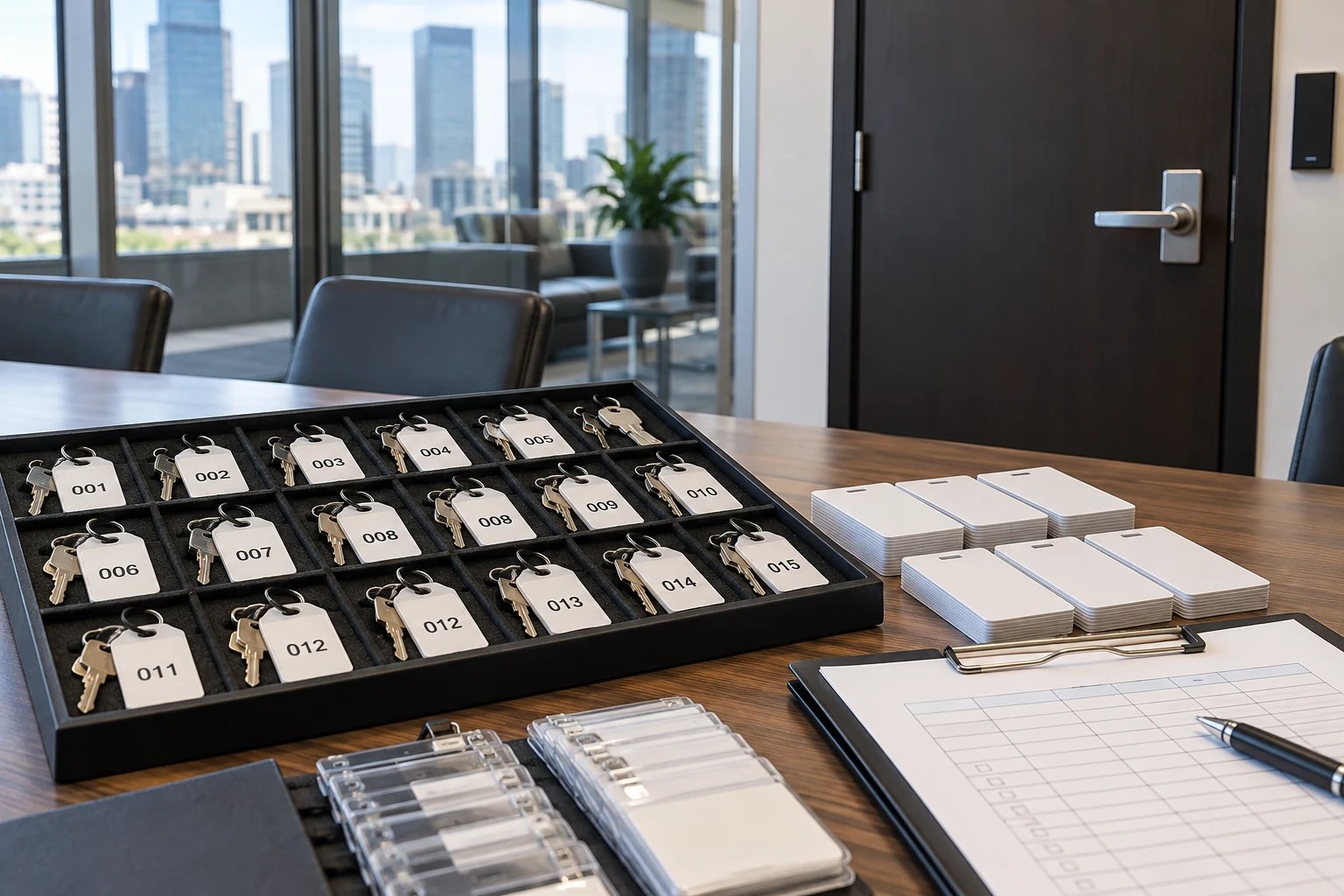
The eight-step Downtown Denver rekeying and access checklist
1. List every opening that matters
Start with exterior entrances, loading and delivery doors, shared lobbies, office suites, storage rooms, cash or records rooms, roof and utility access, parking entries, and any door between public and staff-only space. Include doors that are normally unused. An inactive side entrance can still be a security gap if an old key operates it.
2. Match people to permissions
Build the list by role rather than memory. Ask what a front-desk employee, manager, cleaner, vendor, maintenance technician, and building owner actually need to reach. Remove access that exists only because it was convenient to issue one broad key or credential.
If a single key opens several levels of a property, review the hierarchy before making changes. Lock Pixies’ commercial master key system service can help organize controlled access without making every key an all-access key.
3. Account for physical keys
Record the identifier, holder, issue date, doors or key group, and return status. “We think there were six copies” is not reliable key control. If an unreturned key can be copied freely or its history is unknown, rekeying the affected cylinders may be the cleanest response.
Commercial lock rekeying changes the pins or compatible internal components so the old key no longer works. The existing lock may remain in place when it is in good condition and appropriate for the opening.
4. Deactivate electronic credentials
Disable cards, fobs, mobile credentials, PINs, and remote administrator accounts belonging to former users. Do not simply delete a name from a spreadsheet; verify that the credential is inactive in the live system. Review shared codes as well. A keypad code known by a departing contractor should usually be changed.
5. Review schedules and door groups
Downtown offices increasingly operate on hybrid schedules. A credential may need weekday access to the lobby and suite but no evening, weekend, garage, or records-room access. Time-limited permissions for cleaners and vendors are easier to audit than indefinite access granted for convenience.
For properties that need individual permissions, logs, or scheduled access, review whether commercial access control is a better fit than distributing more unrestricted keys.
6. Inspect the complete door opening
A revoked credential does not secure a door that fails to latch. Check whether each door closes without being pulled, the latch fully enters the strike, the closer is not leaking or slamming, hinges or pivots are stable, and panic hardware releases and relatches normally. Do not add improvised locks or change exit hardware without a qualified review.

7. Test emergency and management access
Confirm that authorized management can still enter after credentials are removed or cylinders are rekeyed. Document the controlled backup method, who holds it, and how it is transferred. Avoid hiding spare keys near the entrance or giving every supervisor the highest-level key.
8. Document the closeout
Record which credentials were disabled, which cylinders were rekeyed, which keys were issued, and what hardware needs follow-up. The next turnover review should begin with this record rather than a new round of guesswork.
Should you rekey, replace the lock, or change access control?
Rekey the lock when the hardware is serviceable but an old key must stop working. This is common after employee or tenant turnover.
Replace the lock or cylinder when it is damaged, heavily worn, incompatible with the needed key system, or no longer appropriate for the door’s traffic and security demands.
Change electronic permissions when a card, fob, code, or mobile credential is involved. Mechanical rekeying does not remove digital access, and deleting a digital credential does not invalidate a metal key.
Upgrade the system when the business repeatedly loses track of keys, needs individual auditability, manages many schedules, or operates multiple suites. The best upgrade is not automatically the newest device; it is the system the business can administer consistently.
Five mistakes that leave security gaps
- Rekeying only the main entrance. Former users may have keys to a loading door, interior suite, garage, or storage room.
- Collecting the badge but leaving it active. Possession and permission are different issues.
- Giving one shared code to everyone. Shared credentials are hard to revoke or attribute.
- Ignoring door condition. A sophisticated reader cannot compensate for a door that does not close and latch.
- Failing to test after changes. Verify authorized entry, free exit, locking, relatching, and backup access before the technician leaves.
What changes by Downtown Denver property type?
Multi-tenant offices: Separate base-building access from individual suite access. A tenant move should not unintentionally invalidate building-management keys or grant access to another suite.
Retail and restaurants: Review opening and closing keys, rear delivery doors, manager access, cash or stock rooms, and contractor codes. Ground-floor businesses often have more vendors and time-sensitive deliveries than a private office.
Mixed-use buildings: Keep residential, commercial, amenity, parking, and service areas logically separated. A universal credential may be convenient but creates a larger exposure if lost.
Renovated or subdivided space: Confirm that old cylinders, door groups, and labels no longer connect areas that are now controlled by different occupants.

How to prepare for a commercial locksmith visit
- Identify the person authorized to approve changes.
- Gather current keys, credential lists, and door schedules.
- Mark doors with reported problems and describe when they occur.
- Note fire-rated or exit doors and any connected alarm or access system.
- Choose a service window that protects business operations and staff access.
- Plan how replacement keys or credentials will be issued and acknowledged.
Lock Pixies serves Denver metro commercial properties and also supports businesses seeking a locksmith in Boulder. This article intentionally focuses on Downtown Denver; the same documented approach can be adapted to other Colorado business locations.
The bottom line
Commercial rekeying after employee or tenant turnover is most effective when it is part of a complete access audit. Account for keys, deactivate digital credentials, review schedules, inspect every relevant door, and document the final state. That process reduces unnecessary replacements while addressing the places where old access can persist.
Call Lock Pixies at (720) 304-5504 to schedule a commercial key, lock, and access review for a Downtown Denver property.
Frequently asked questions about Downtown Denver commercial rekeying
Should a business rekey every time an employee leaves?
Not always. If the employee had only an individually managed electronic credential, deactivation and verification may be sufficient. Rekeying is appropriate when a physical key was not returned, copies cannot be accounted for, or the key operates sensitive or exterior doors. The decision should follow the access that person actually held.
How long does commercial rekeying take?
It depends on the number and type of cylinders, whether they belong to a master key system, the condition of the doors, and how many new keys are required. A small office may be completed in one visit; a multi-tenant property should be surveyed and scheduled to avoid locking out authorized occupants.
Is rekeying as secure as replacing the lock?
Rekeying can restore key control when the existing hardware is sound and suitable. It does not repair worn, damaged, poorly installed, or under-specified hardware. A technician should examine the cylinder, lock body, strike, door, and frame before recommending either option.
What should we do if a master key is lost?
Treat it according to every door it can operate. Identify the affected hierarchy, restrict access where practical, and arrange prompt professional review. Rekeying may involve multiple cylinders, so accurate records and an authorized decision-maker are important.
Is deactivating an access card enough after termination?
Only if the person had no physical keys, shared codes, mobile credentials, remote administrator access, or knowledge of a mechanical override. Review all access methods rather than assuming the visible badge was the only one.
How often should a Downtown Denver business audit keys and credentials?
Review them after every material personnel or tenant change and on a recurring schedule appropriate to the property. High-turnover, multi-tenant, hospitality, retail, and vendor-heavy sites usually need more frequent reconciliation than a small office with a stable team.